Think about the last time you felt better after simply talking something out — with a friend, a partner, or even out loud to yourself on a walk. That is not a coincidence. Speaking is one of the oldest and most effective tools we have for processing stress.
Talking is thinking
When you put a feeling into spoken words, something shifts. Researchers call it "affect labeling": naming an emotion out loud measurably reduces its intensity and calms the brain's stress response. You are not just venting — you are helping your nervous system file the experience and move on.
Typing can do some of this. But speaking is faster, more natural, and far more connected to the body. Your tone, your pace, your breath all come along for the ride.
Lower friction is what makes it a habit
Most wellness tools fail for a boring reason: they ask too much. Open the app, pick a category, type a journal entry, tag your mood, tap save. Each step is a small tax, and taxes add up to abandonment.
This matters more than it sounds, because the entire value of tracking your wellbeing comes from doing it consistently. A record with gaps tells you very little. The reason most people never build a usable record of their own lives is friction — and voice removes almost all of it.
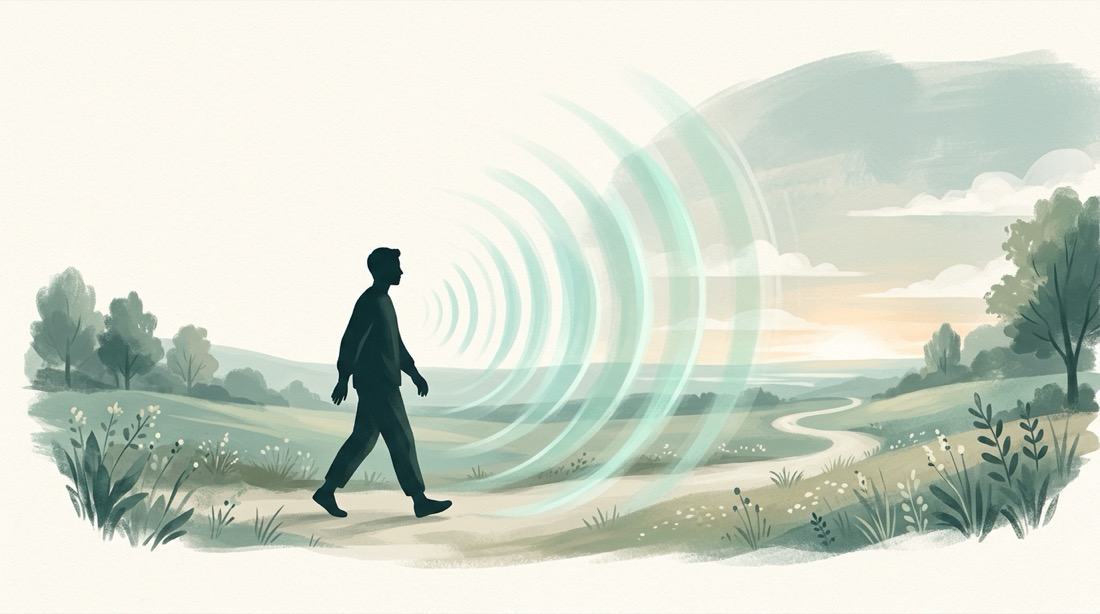
Voice-first coaching collapses the whole ritual into one action: just talk. No keyboard, no menus. You can do it lying in bed, walking the dog, or sitting in your car before work. Lower friction means you actually show up — and showing up, day after day, is what builds the record that makes change visible.
It feels like being heard
There is a qualitative difference between logging data and being in a conversation. A voice that responds, asks a follow-up, and reflects back what you said creates a sense of being heard — and feeling heard is itself a regulating, vagal experience. It is the difference between a spreadsheet and a coach.
How MyUltra.Coach uses voice
In a MyUltra.Coach session you speak naturally and the orb responds in real time — listening, asking, and guiding. There is nothing to type and nothing to configure. That design is intentional: the easier it is to start talking, the more often you will, and the more those small conversations add up into a record you can learn from.
If journaling apps have never quite worked for you, this is probably why. You were never meant to type your way to calm. You were meant to talk it out. Have your first conversation.